-
Submenu items

Publication Information
Published by: Admin
Published: 7 months ago
View: 177
Pages: 23
ISBN: 1
 Download PDF (EN)

Abstract
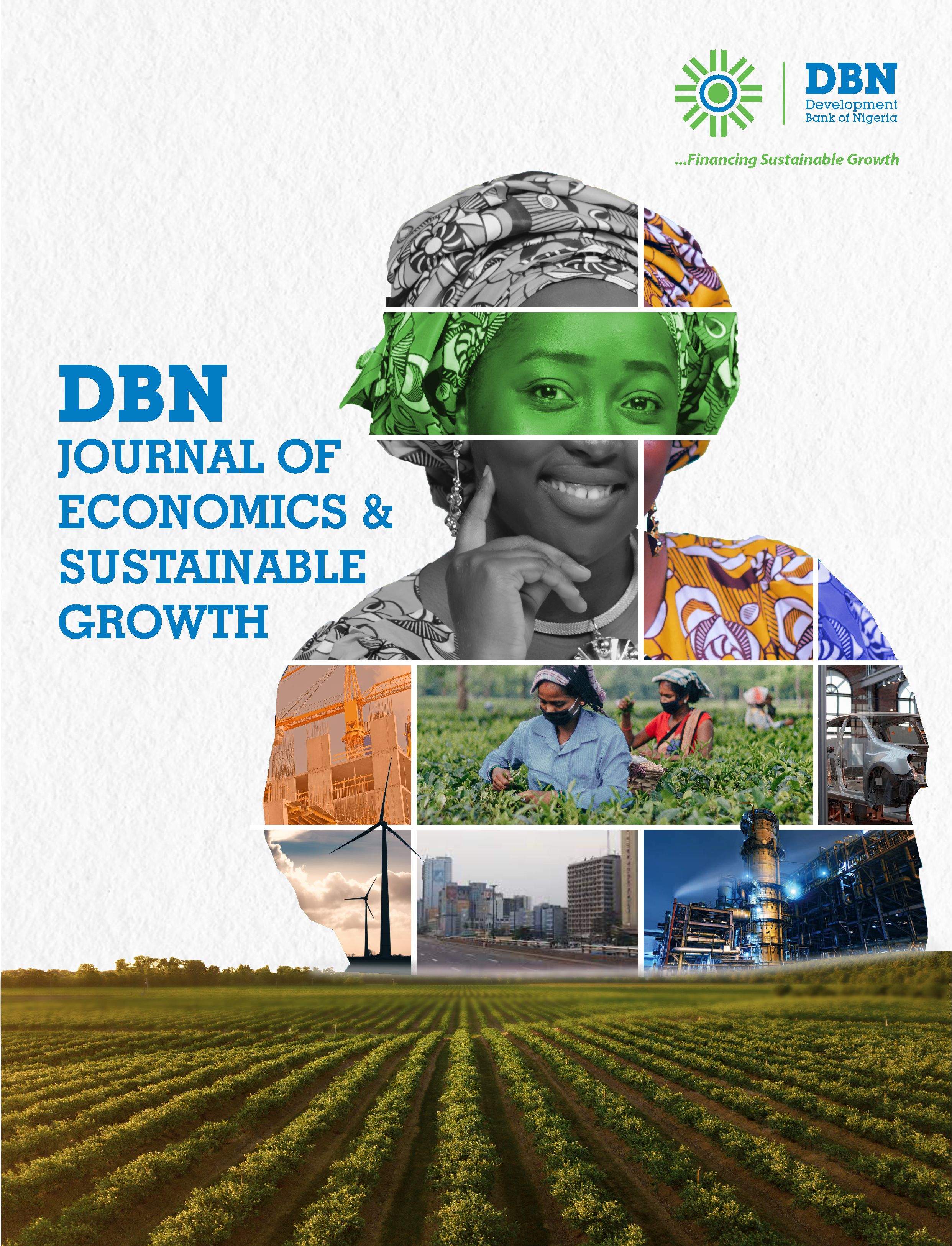
The study investigated the effects of capital imports on manufacturing
sector performance in Nigeria. Data from various sources such as World
Integrated Trade System (WITS) database (2024) and Central Bank of Nigeria (2024)
were utilized and analysed using descriptive analysis and the Autoregressive
Distributive Lag (ARDL) Model. Empirical findings from the study reveal that both the values of capital goods import and its percentage
to the GDP have been fluctuating. In fact, the percentage of capital goods
import to GDP has not experienced any significant change. This implies that
periods of increased capital goods importation experienced increased GDP and
increased percentage of Capital goods to GDP. A useful conclusion could be one
factor needed to stimulate growth in Nigeria is increased capital goods importation.
The study further attempted to
investigate the factors that significantly determine capital goods import in
Nigeria. The results reveal that exchange rate, inflation, domestic investment
and gross domestic product significantly determine capital goods import. Furthermore,
the study then proceeded to investigate the effects of capital goods on the
performance of the manufacturing sector in Nigeria. The results revealed that
capital goods import positively and significantly influence manufacturing
sector performance both in the short run and long run. This implies that
availability of capital goods in the domestic economy is very vital for the
effective and efficient performance of the manufacturing sector in Nigeria.
Also, population growth and domestic investment exhibit positive and
significant relationship with manufacturing sector performance. This means that
population growth which signifies labour supply because in Nigeria, a large
proportion of the population falls within the labour force.
Related Publications
VOLUME 8 ISSUE 1 2026
Sovereign Debt, Inflation Dynamics, and Bond Yields in Nigeria: A Synthetic Control Analysis
 7 months ago
 0
shares
0
shares
VOLUME 8 ISSUE 1 2026
Foreign Direct Investment (FDI), Remittances, and Income Inequality in Nigeria: Towards achieving SDG 10
7 months ago
0
shares